
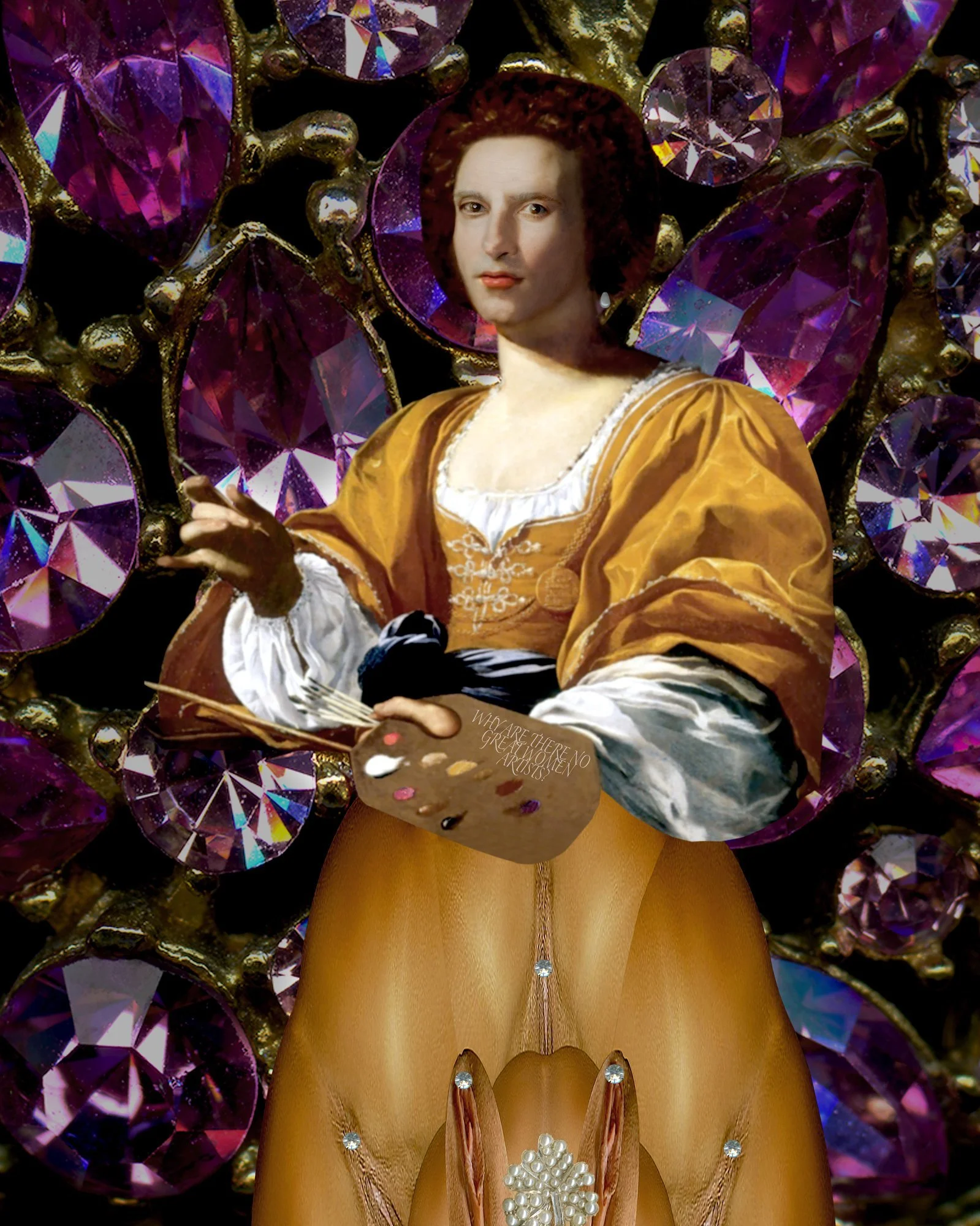
TWICE RAPED — Artemisia Gentileschi
FEMINIST | BAROQUE PAINTER
At twelve, when her mother died, Artemisia Gentileschi became the effective head of a household that included three older brothers and the circle of male painters working under her father, Orazio. Recognizing her talent, Orazio hired the painter Agostino Tassi to tutor her privately; Tassi raped her at sixteen. Orazio's lawsuit against Tassi treated the crime as a property dispute — Artemisia's virginity was legally understood as an asset belonging to her father, its loss reducing her value on the marriage market. She won the case, but not before enduring a second violation: to test whether she was telling the truth, a Sibille — a cord tightened around her fingers capable of permanently crippling a painter's hands — was applied to her during testimony, while Tassi, already an established rapist with a known history, faced no equivalent test. She repeated, as the device tightened, "it's true, it's true, it's true." The title names both assaults: the rape itself, and the legal system's demand that she prove it under torture. What the record leaves out is the painting. Gentileschi's Judith Slaying Holofernes, made in the years following the trial, renders the biblical decapitation with a physical violence unmatched by her male contemporaries' more decorous versions of the same scene — widely read as the rawest possible answer she could give, on canvas, to a courtroom that had already taken its own kind of testimony out of her hands. Excluded from art history for three centuries, she is now recognized as one of the era's greatest painters, full stop, not qualified by gender.