
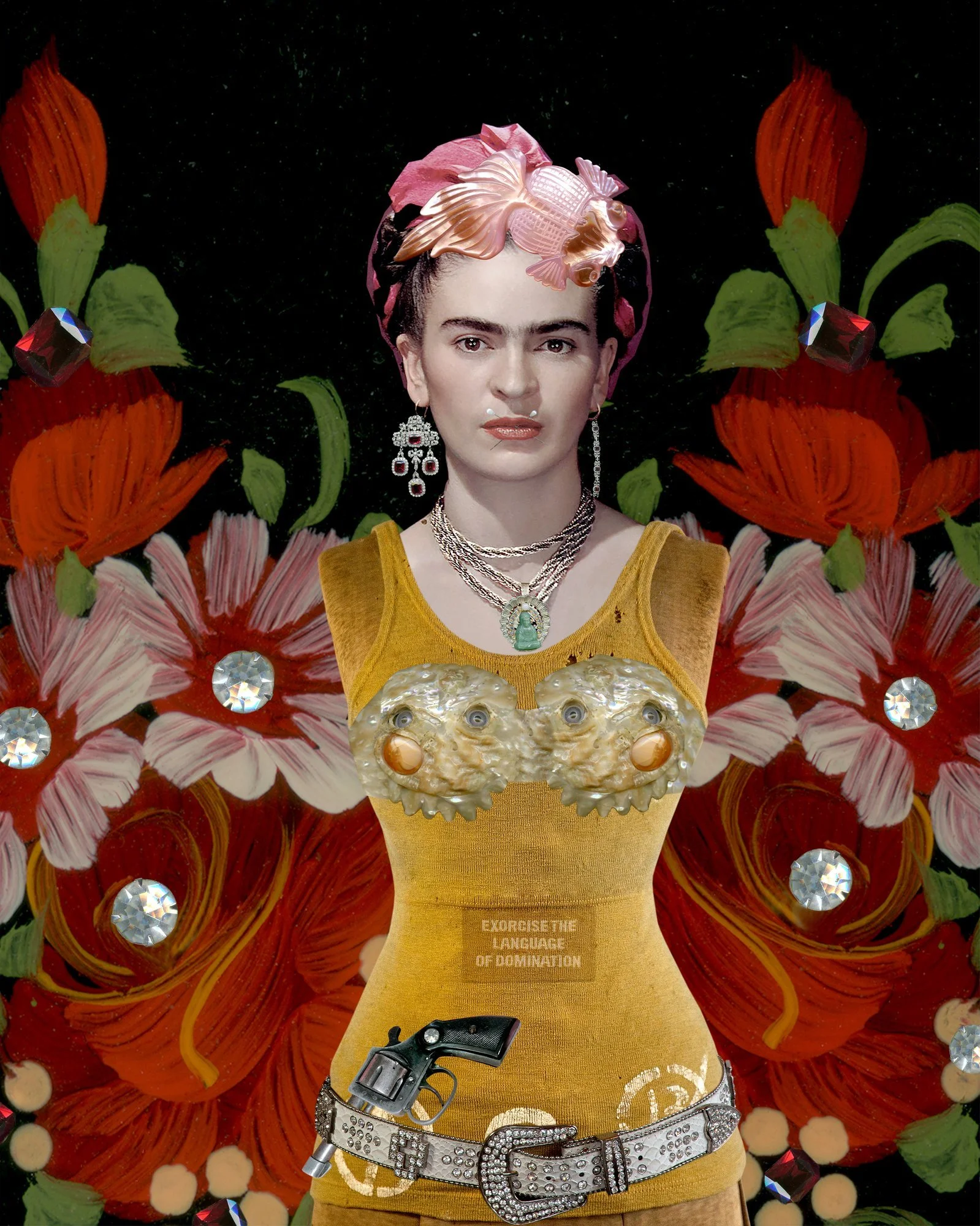
SUBMISSION — Frida Kahlo
PAINTER
SUBMISSION argues with its own title. A revolver sits tucked into a rhinestone-studded belt at her waist; across her torso, faint stenciled letters read EXORCISE THE LANGUAGE OF DOMINATION; her chest is rendered as two open oyster shells, pearl at the center of each — the wound made into the thing of value, which is close to how Frida Kahlo actually worked. Kahlo contracted polio as a child and was nearly killed in a bus accident as a teenager, an injury that led to more than thirty surgeries and a body in nearly constant pain for the rest of her life; she painted much of her work from bed or a wheelchair, on an easel her parents had built to fit over her. Her marriage to Diego Rivera, a serial infidelity survived through divorce and remarriage, supplied some of her worst grief and some of her most direct subject matter. None of this made her compliant. Her paintings confronted her own body, Mexican identity, and gender politics with a bluntness rare for the period, and the gun at her waist in this collage is not incidental — it belongs to a woman whose response to pain was never quiet acceptance. Her work went largely unrecognized until the 1970s; it now sells for some of the highest prices ever paid for a Latin American artist.