
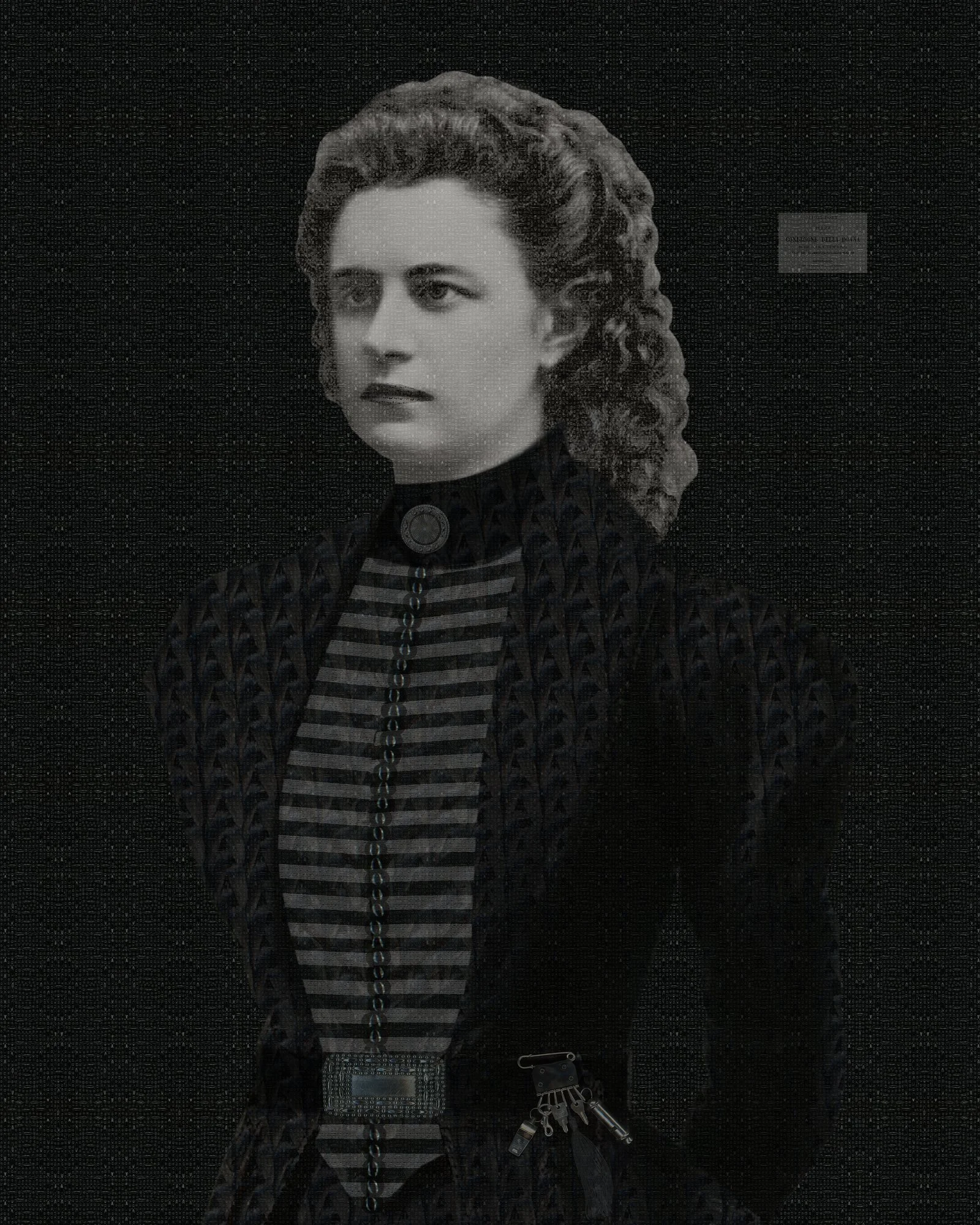
AVVOCATESSA — Lidia Poët
LAWYER
Every other work in this alphabet is decorated in gold, jewels, color. AVVOCATESSA is not. Lidia Poët appears in black and white on a background woven tight as legal cloth, and the only ornament granted her is a fistful of keys hanging from her waist — the traditional badge of a woman entrusted with a household, not a courtroom. Poët passed her bar exam in 1881 and was disbarred within the year for being a woman; she spent the next decades practicing law from inside her brother's firm, unable to sign what she had argued. A small plaque sits in the frame's corner, its text almost illegible — a credential rendered too faint to read, the way her actual qualification was rendered too inconvenient to recognize. The collage withholds from her the visual richness given to every other woman in the series, and that withholding is the point: official recognition as a lawyer came only when she was sixty-five. She lived long enough to see Italian women vote for the first time, in 1946 — three years before her death.