
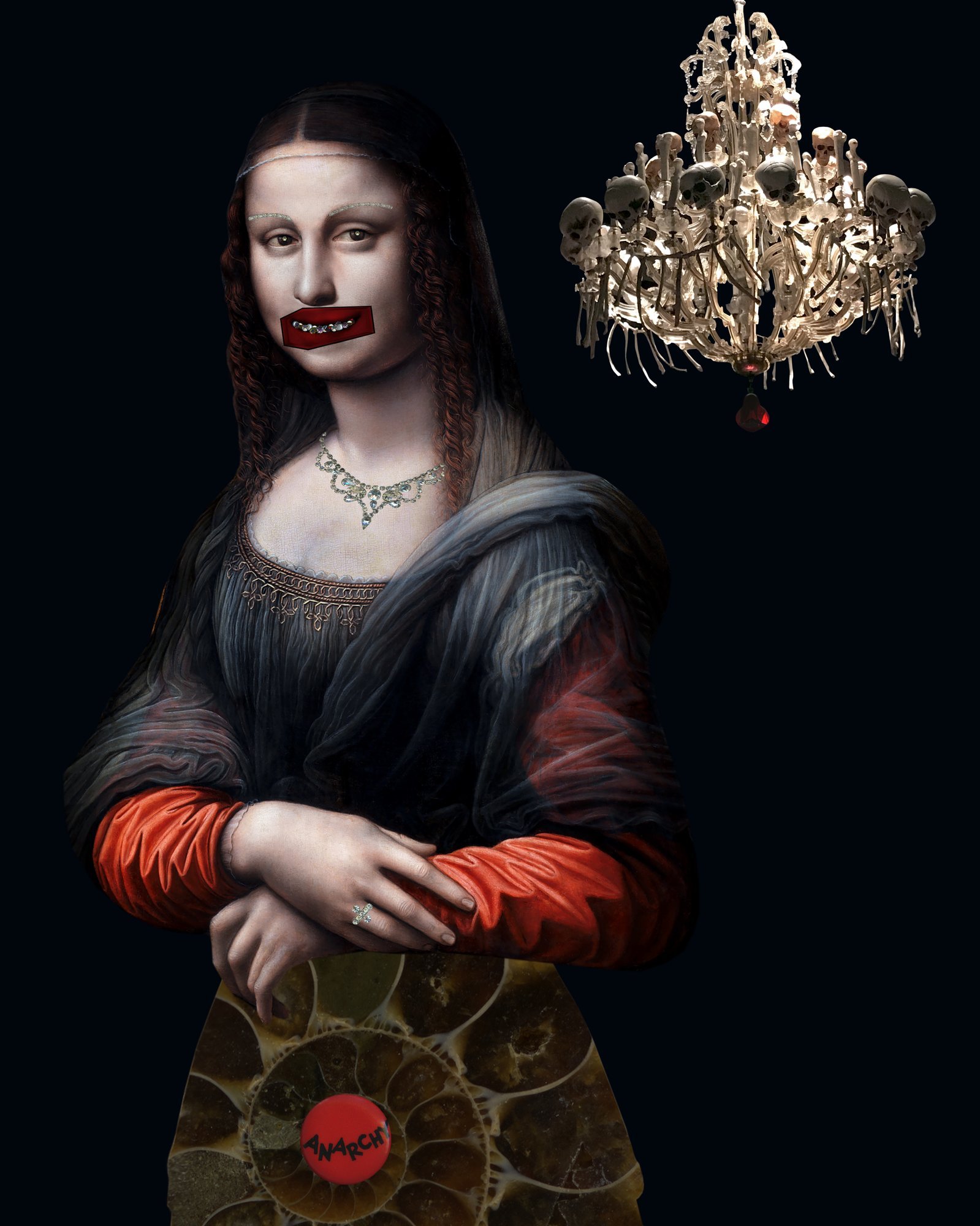
SEE ME SMILE — Mona Lisa
ICON | MYTH
Her mouth here is not merely still — it is bound shut, wrapped in a dark band that erases the one detail the entire painting is famous for. The title, read against that image, stops sounding like an invitation and starts sounding like a command issued to someone made physically unable to comply. Leonardo began the original portrait around 1503 and reportedly carried it, unfinished, for the rest of his life, dying in 1519 without resolving what to do with that famously ambiguous expression — five centuries of scholarly and popular debate over a smile that may never have been settled even by the man who painted it. In the intervening centuries the demand hardened rather than eased: a smiling woman was once assumed sinful and seductive; she is now assumed pleasant and unthreatening, expected by advertising, film, and ordinary social manners to perform warmth regardless of what she actually feels. Elizabeth II put the asymmetry plainly: a solemn man reads as serious, a solemn woman reads as miserable. A skull chandelier hangs beside this Mona Lisa, dripping a single red jewel like blood, and at the hem an ammonite — a fossil older than any human demand — carries a small button reading ANARCHY. The pairing suggests the rebellion here predates the request for compliance by geological time. The mouth is bound. The title asks anyway. The refusal is in the gap between the two.