
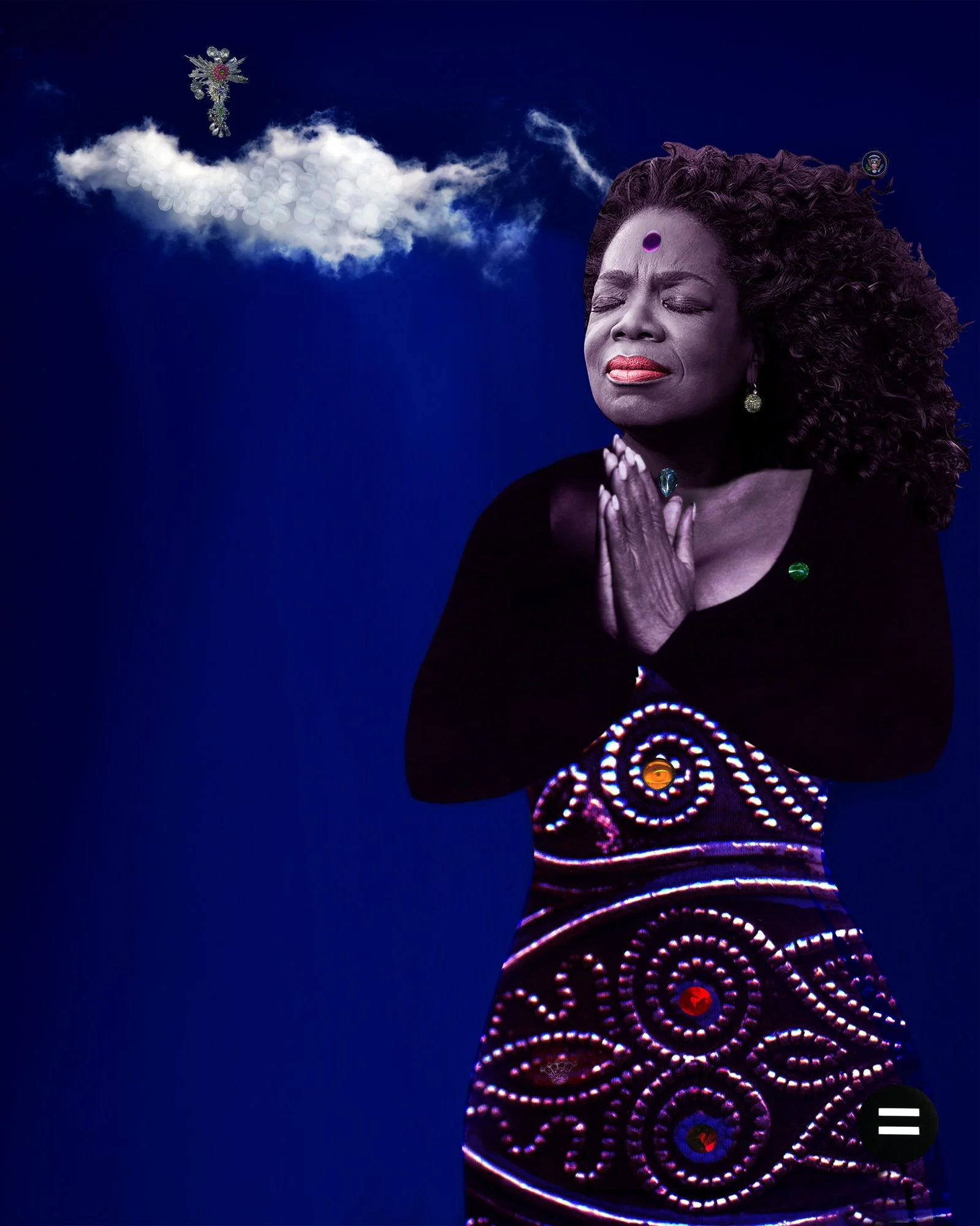
THE VOICE — Oprah Winfrey
MEDIA MOGUL | ACTRESS | AUTHOR | PHILANTHROPIST | HUMANITARIAN
Hands folded in prayer, eyes closed, a single mark at the center of her forehead: the pose belongs to meditation rather than television, and it is not incidental. After building the highest-rated talk show in American history out of the confessional, tabloid-adjacent daytime format the genre started in, Oprah Winfrey spent her later career converting that same audience toward something closer to organized spirituality — a cable network built around self-actualization, a book club capable of making an unknown title a bestseller overnight, hour-long conversations with spiritual teachers rather than celebrities in crisis. The jeweled medallions spiraling down her dress read like a string of small mandalas, consistent with that later chapter more than with the newsroom she started in. Winfrey was born in rural Mississippi to an unmarried teenage mother, sexually abused as a child, and pregnant at fourteen by a relative; the son she gave birth to died in infancy. She talked her way into radio at sixteen, won a scholarship through an oratory contest, and became the first Black woman and youngest person to anchor the news at a Nashville station before Chicago made her a national name. She is the first Black woman to become a billionaire through her own media company, a distinction that sits uneasily beside how openly she has discussed the abuse behind it. The title names the actual instrument: a voice built in a Baptist church basement, still operating on the same original register, just aimed now at something larger than the news.