
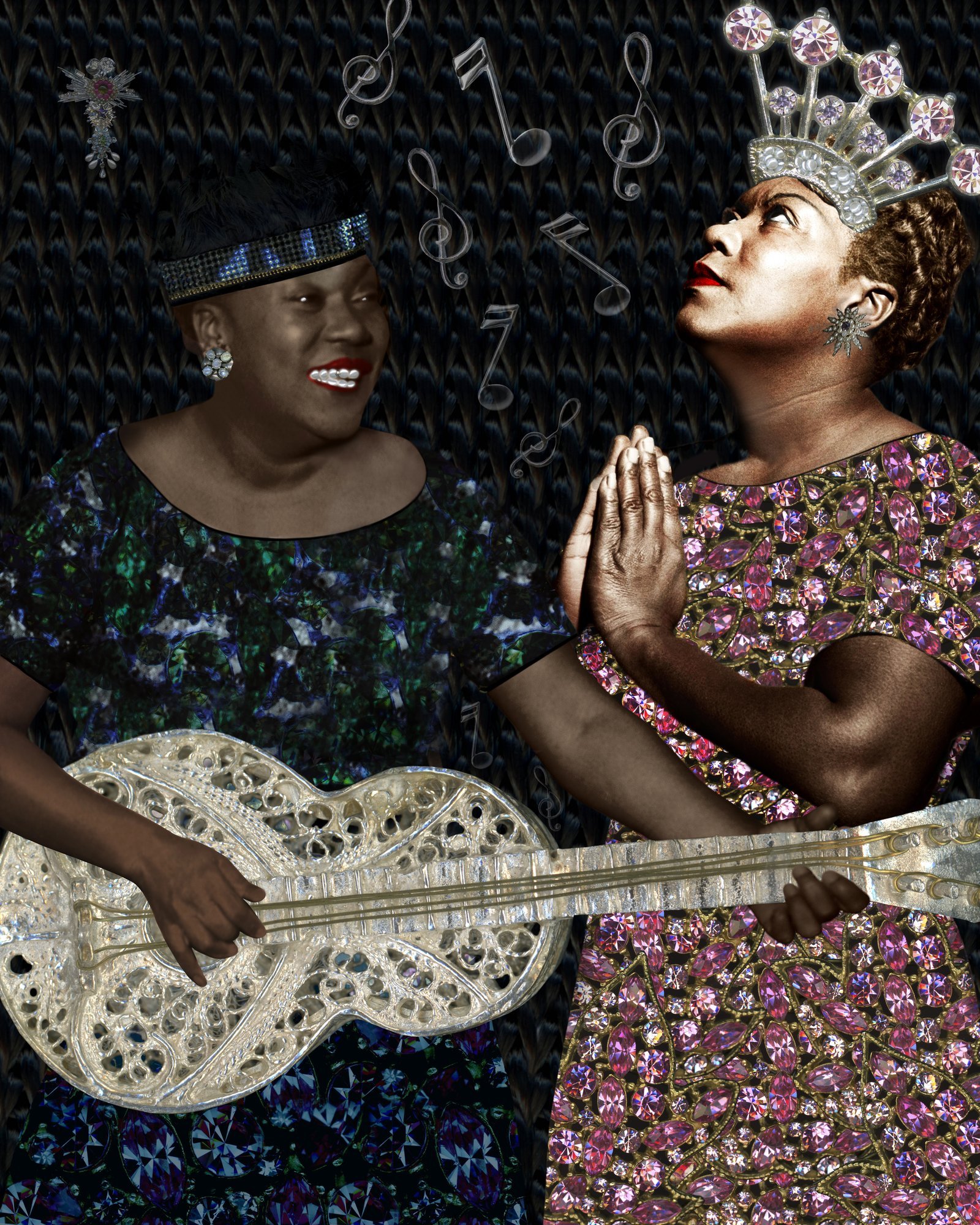
PREACHIN' ROCK N' ROLL — Sister Rosetta Tharpe
MUSICIAN | GUITARIST
PREACHIN' ROCK N' ROLL pictures her with another woman, not alone — one plays a guitar carved and mirrored like something built for a cathedral, the other prays with her face turned upward, crowned in pink stone. Sister Rosetta Tharpe was married three times and, by her own account, loved at least one woman as openly as her marriages allowed her to love men; she toured with a female partner at a time when doing so openly required real nerve, and the collage does not hide that pairing in a solo portrait the way most tributes would. Tharpe was shredding electric guitar solos while Elvis Presley was still a toddler, moving between church and nightclub, gospel and secular, decades before rock and roll had a name for what she was doing. Her 1945 single Strange Things Happening Every Day crossed from the gospel charts to the pop charts, a leap some historians credit as the first rock and roll record. It took the Rock & Roll Hall of Fame nearly a hundred years to induct her. Female, Black, and queer, Sister Rosetta Tharpe built the genre before the men credited with inventing it had picked up a guitar.